- Incomplete information and differing interpretations of the EU’s new Entry/Exit System are creating a mix of facts and misconceptions at border crossings.
- The coming summer will be a test of endurance for European airports – and for travellers from non-EU countries.
- We gave a lot for visa liberalisation, and today we face new barriers, says former Minister for European Integration Ivica Bocevski.
When travelling to EU countries, there is probably no more frequently used term than EES – the Entry/Exit System for entering and leaving the Union. The Balkan states in the western part of the peninsula, known as the Western Balkans, are among the most affected, because they are not members of the European Union. Travellers’ experiences vary. Some complain that they were held up longer than they expected and planned; others boast that the procedure was done quickly. But one thing is common to all: incomplete information and differing interpretations of the new system have created a picture in which truths and misconceptions about how it is applied at border crossings are equally present. As reactions grow, so do propaganda and counter-propaganda about the EU’s digital border control, which outside the Union has been interpreted as distancing itself from the rest of the world.
Full implementation of the new digital system for registering and controlling the entry and exit of citizens of non-EU countries officially began on 10 April 2026. The new way of border control also applies to Macedonian citizens and completely replaces the previous practice of manually stamping passports with electronic and biometric registration. The system, which until now was introduced gradually and in phases, automatically records the time and place of entry and exit, the length of stay, and any entry bans for EU countries. The aim is to increase security and to control the Union’s external borders more efficiently.
Ivica Bocevski, a former Macedonian diplomat and Minister for European Integration, who frequently travels to EU countries for work, says the Union has proved politically insensitive and made a move that, in his view, is deeply wrong.
“From 2008–2009 all the way to 2026 – a full 18 years – citizens of Macedonia and the Western Balkan countries have enjoyed visa-free travel to the EU. Compared with my generation, when as secondary-school and university students we had to submit nine documents for a week-long stay and wait several months for a visa from Western countries, this was the only move that citizens recognised as a kind of fulfilment of the EU’s commitments to European integration,” he said, adding bitterly that this process has now been made unnecessarily complicated.
Social media are “boiling”
Social media are boiling with reactions from citizens in the region who have run into “barricades” at airports when they reach passport control. The complaints are that the waits are too long and that even the border services do not have a uniform approach to applying the procedures. Some take photos on both entry and exit, others only on entry, and in some countries, citizens claim, the fact that the traveller has already given fingerprints and been photographed once is ignored and they are put through the same process again. This points to confusion even among the officials responsible for implementing the EES, which contributes to differing interpretations by travellers.
The system, which has been gradually implemented since October, has already created long queues at some airports. The BBC reported that more than 100 passengers failed to board an easyJet flight from Milan to Manchester before take-off because of delays at passport control, and another Ryanair flight to the same destination.
Recently, Serbia’s Danas, citing Britain’s Guardian, reported that travellers passing through some European airports were waiting up to three hours at border controls due to the start of full implementation of the EES. The article also quotes Olivier Jankovec, director of ACI Europe (Airports Council International), telling the Financial Times that the situation during the summer months, at the peak of travel, would be “simply unimaginable”.
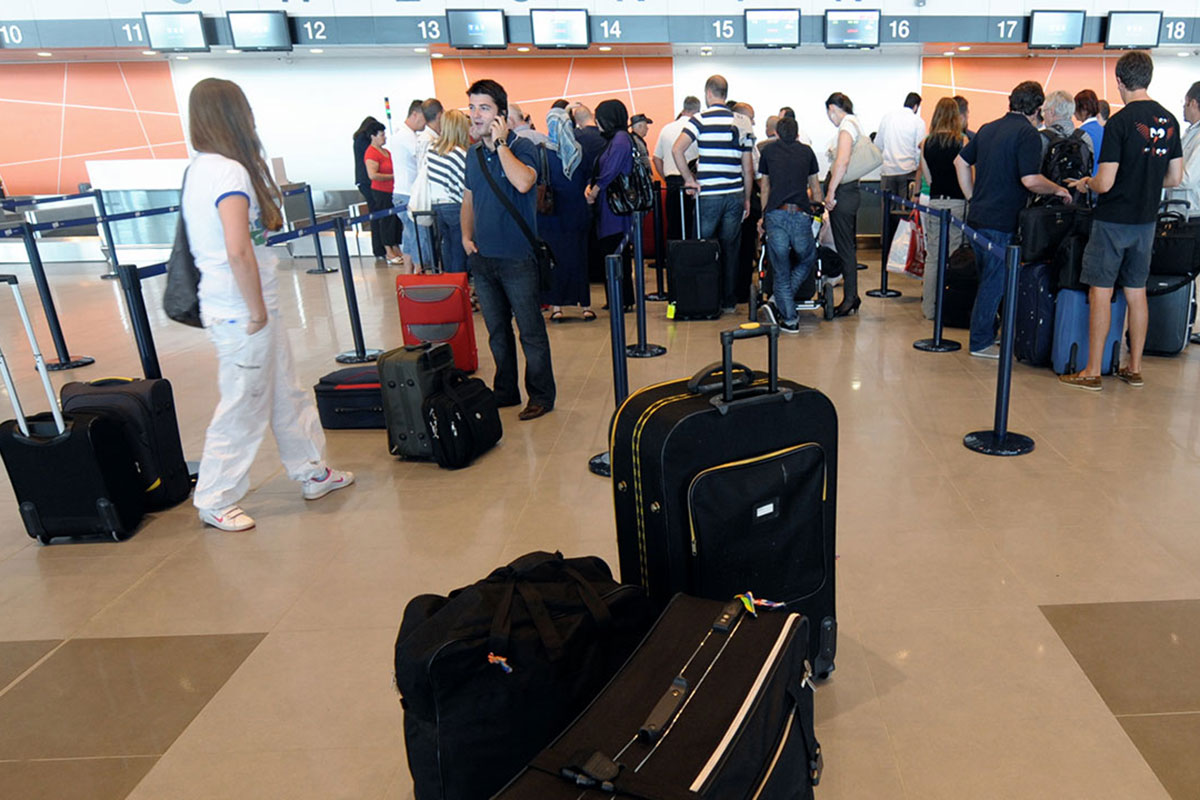
What is interesting, however, is that the confusion is being created by the authorities themselves at various levels and by the institutions concerned, which make diametrically opposed claims. While the European Commission claims that the average registration time for one passenger is 70 seconds, ACI responded that it can take up to five minutes and that flexibility is needed, including suspending the system when there is heavy congestion.
As for the Western Balkans, the new digital control system has been seen as yet another blow from the Union to the region. Serbian media spare no words in describing what they claim is the disaster it is causing for their citizens. According to b92.net, the EES has led to scenes never seen before that some will remember forever.
“People were vomiting and felt so ill that they fainted, one passenger was even crying in pain, and all because of the stress for millions of non-EU citizens,” the news network reported, describing how “travel chaos was reported by those returning to the UK from Geneva, Lisbon and Malta”. “There were also Serbs who waited two hours at passport control. Hours of waiting and missed flights marked the first days after the full introduction of EU entry checks,” the report adds.
Whether out of lack of interest or lack of information, the region paid little attention to the fact that, besides 25 EU member states, the digital system also applies in Iceland, Liechtenstein, Norway and Switzerland. In Ireland and Cyprus, although they are EU members, passports will still be stamped manually on entry. Andorra, San Marino, Monaco and the Vatican are exempt from the new measures, while citizens of the powerful USA, Canada and the UK share the same fate as citizens of other non-EU countries.
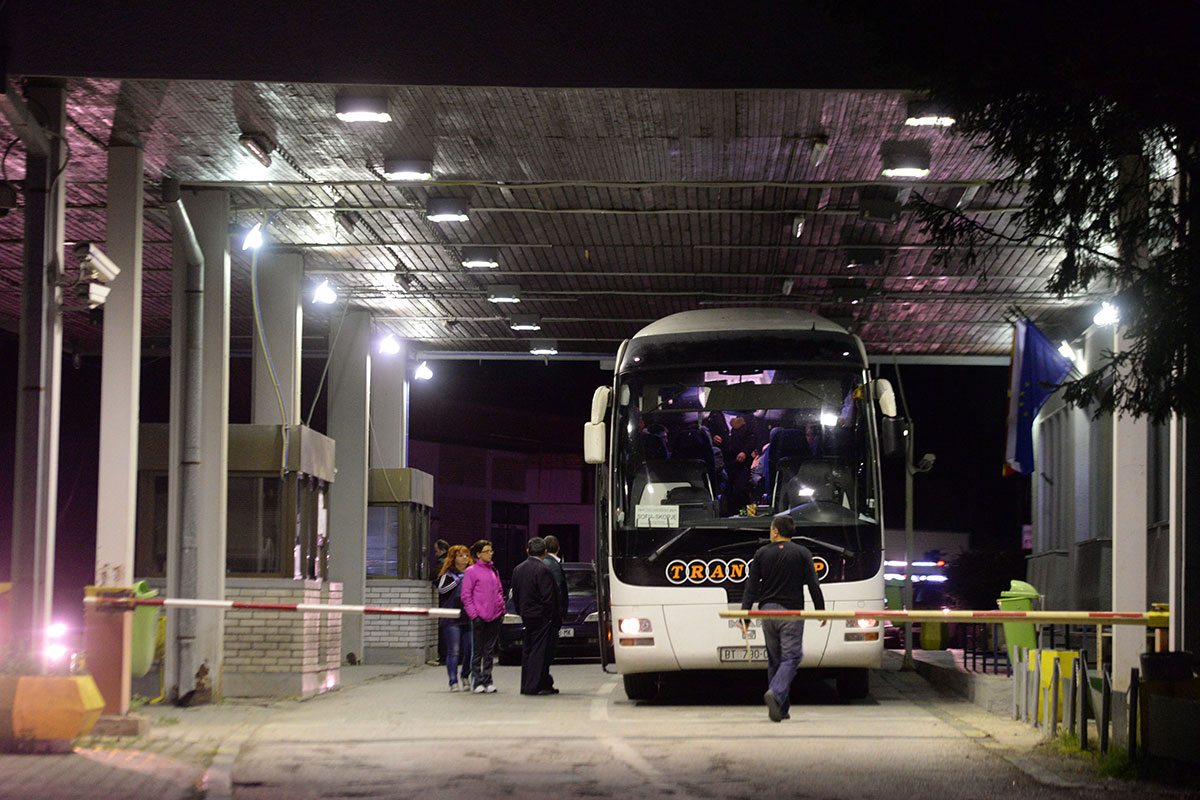
Regarding our region, Bocevski believes the Union has shown an offensive attitude towards those it calls its partners.
“When that legislation was being prepared in the EU, it occurred to no one to exempt the Western Balkan countries, or the Eastern Partnership countries – Ukraine, Moldova, Georgia – from this provision. It is tragic and sad that Macedonia has the same status as Colombia, Argentina, Chile, Brazil, Singapore,” says our interviewee Ivica Bocevski.
I don’t underestimate these countries, Bocevski adds – they are serious states – but none of them has a European perspective, none of them is a candidate for membership, and that is why putting the Western Balkans on the same level as them is unacceptable.
“None of them will one day be an EU member. But all six Western Balkan countries will be EU members. And this political blindness, where no one recognised that this would be received negatively in the Balkans, is for me beyond all common sense,” he says.
Aleksandar Seničić, director of YUTA, the National Association of Travel Agencies of Serbia, points out that the crowds over the Easter holidays are proof that the whole system has not been well designed and implemented.
“There are no rules, and unfortunately this will not change. I believe it will only change if big countries such as Spain, France and Italy rebel, and because of travellers from the UK and America, who far outnumber us Balkan people,” Seničić told Blic. “I don’t know how France, Portugal or Spain will cope when three planes land, say, from America or the UK,” he adds.
Finally, he reminded travellers of one more thing: they need to keep track of how long they stay in the European Union, because with the new, complete EES there is no more room for cheating – the system counts every day.
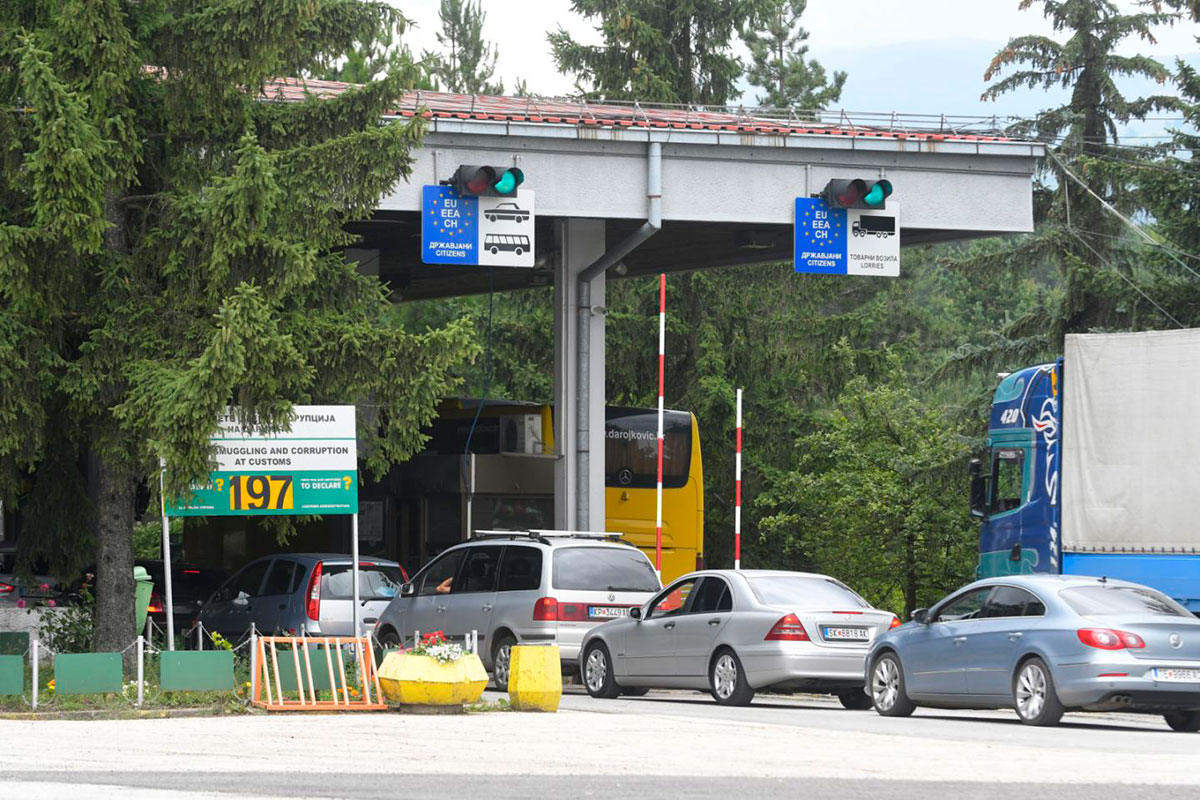
The reactions to the waiting times have overshadowed the main reason for introducing digital control, which is hardly even analysed. The main goal of the EES is to control the stay of travellers entering the Schengen Area. It is limited to 90 cumulative days in any six-month period. A longer stay requires a visa.
Apart from the so-called truck drivers from Macedonia and other Western Balkan countries, for other citizens the limited stay is secondary, while they worry about whether, for example, they will reach the Greek beaches on time this summer.
That is why the Tourism and Hospitality Chamber of Macedonia sent a letter to the Greek Ministry of Tourism asking for Macedonian tourists to be temporarily exempted from the EES between 1 June and 30 September. The request comes after the Greek authorities previously made a similar decision for British tourists. The Chamber says the request aims to ease border procedures and prevent long delays that could negatively affect tourist traffic to Greece. The tourism sector warns that applying the new system without any relief could significantly increase waiting times at border crossings, especially at the height of the summer season, when passenger numbers are highest.
“We contacted the Greek Minister of Tourism and officially requested that Macedonian tourists be exempted from the new system from 1 June to 30 September. At the same time, we are in constant communication with the hoteliers’ chambers in Halkidiki, which are also very concerned and are asking for the system’s application to be postponed,” the president of the Tourism and Hospitality Chamber, Arkan Kerim, told the daily Vecher.
But wishes are one thing and reality another, and it remains to be seen whether Greece will show understanding for tourists from Macedonia.
Montenegro also fears that, although the aim of the EES is to modernise and increase the security of the EU’s borders, the coming summer will be a test of endurance for European airports – and for travellers from Montenegro planning to travel to the Schengen Area. Experts there advise travellers to plan to arrive at the airport at least 60 to 90 minutes earlier than in previous years during the summer, especially when travelling to major European hubs.
But unlike the complaints coming from Serbia, in Montenegro there have been no notable reactions from citizens who had to wait at airports. As early as October 2025, the Montenegrin government informed its citizens extensively about the changes to the entry and exit rules, thereby eliminating any room for disinformation about the new EU rules. Given how much influence Serbia has over its once “brotherly” people in Montenegro, the precise information provided by the government in Podgorica was a useful signal to its citizens that they should adapt, without much fuss, to the winds blowing from the European Union. This stance made sense in recent days, when the big news arrived from Brussels that a working group had been formed to draft Montenegro’s accession treaty, practically announcing that after a 13-year pause the EU will enlarge again – and the winning ticket went to Montenegro, which will most likely be admitted to the European family by 2030.
How many times will they photograph us?
The atmosphere around European integration seems to be key to how the Western Balkan countries experienced the new border measures. Macedonian politician and diplomat Bocevski says the Union acted badly. “When the legislation was drafted, they forgot that candidate countries exist. As if the Union were a finished project and enlargement were already behind us,” he stressed.
According to Bocevski, this is also the reason for citizens’ resistance.
“An acquired right that has been used for 18 years is suddenly transformed into a form of digital visas, which, however we draw them, are still a barrier. A barrier that stands between citizens and their free travel in the EU. In fact, there was no reason at all to adopt this. What is even stranger for the citizens of Macedonia and the entire Western Balkans is why there is no correction of this policy,” he stresses.
The new system, under which travellers on their first trip after its introduction go through a full registration process that includes being photographed, having their fingerprints scanned and entering passport data, is unsettling for travellers. Social media “exploded” with reactions about long waits and faulty machines. The biggest confusion is about whether photographs and fingerprints will be taken at every entry and exit or not. Citizens who have been through the experience tell different versions.
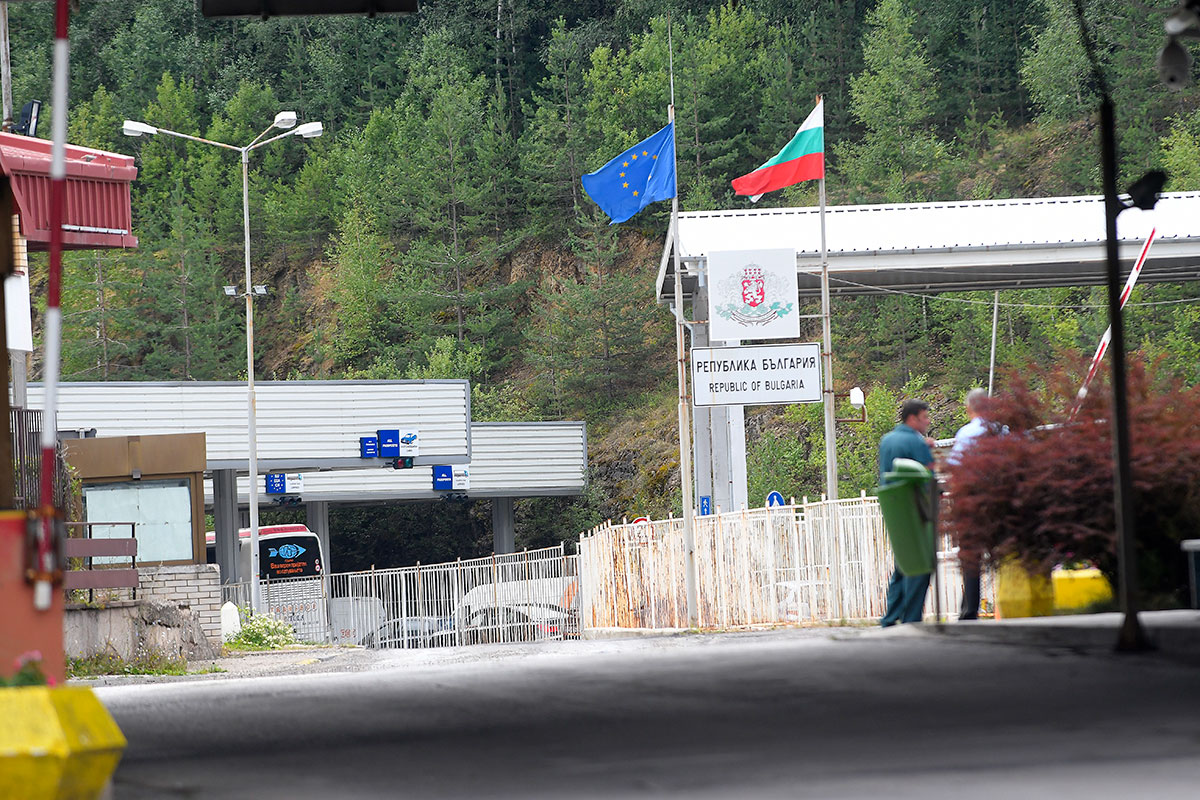
To make the procedure easier, there will also be self-service kiosks at border crossings, and pre-registration via mobile apps may also be possible. On subsequent trips, checks will be much faster, because the data will already be stored in the system and will only need to be verified.
There are also reactions to the question of who will have access to the data collected about citizens and whether it could be misused. According to the explanation, all data will be processed and stored in line with the strict standards of the European Union and the General Data Protection Regulation (GDPR), which should guarantee full protection of privacy and transparent use of the information collected.
But rules are rules, and there is no doubt that they have caused a great deal of nervousness in the Western Balkan countries, including Macedonia.
“As a country, we gave a lot of money for visa liberalisation. We wouldn’t spare a single denar now either to join the Schengen system if someone made it possible for us,” said our interviewee Ivica Bocevski.
“The only thing sillier is the reaction of some, I would say, public figures here in the Balkans who try to explain to us that someone is manipulating the population. But no one is manipulating the population. An artificial barrier is being created that did not exist before and should not exist,” he concluded in our conversation on the topic.
This content was produced by the Institute of Communication Studies.
Journalist: Sonja Kramarska
Camera: Nake Batev
Photos: Darko Andonovski and Nake Batev
Editing: Risto Dushkovski
Related stories (in Macedonian):
The overly long European process and weak reforms create ideal ground for anti-EU campaigns
The Western Balkans and emigration: the EU will admit “empty states”
A lot of money is invested in youth support programmes, but young people keep emigrating
This article was translated from Macedonian using artificial intelligence (AI). The original Macedonian version is available here.