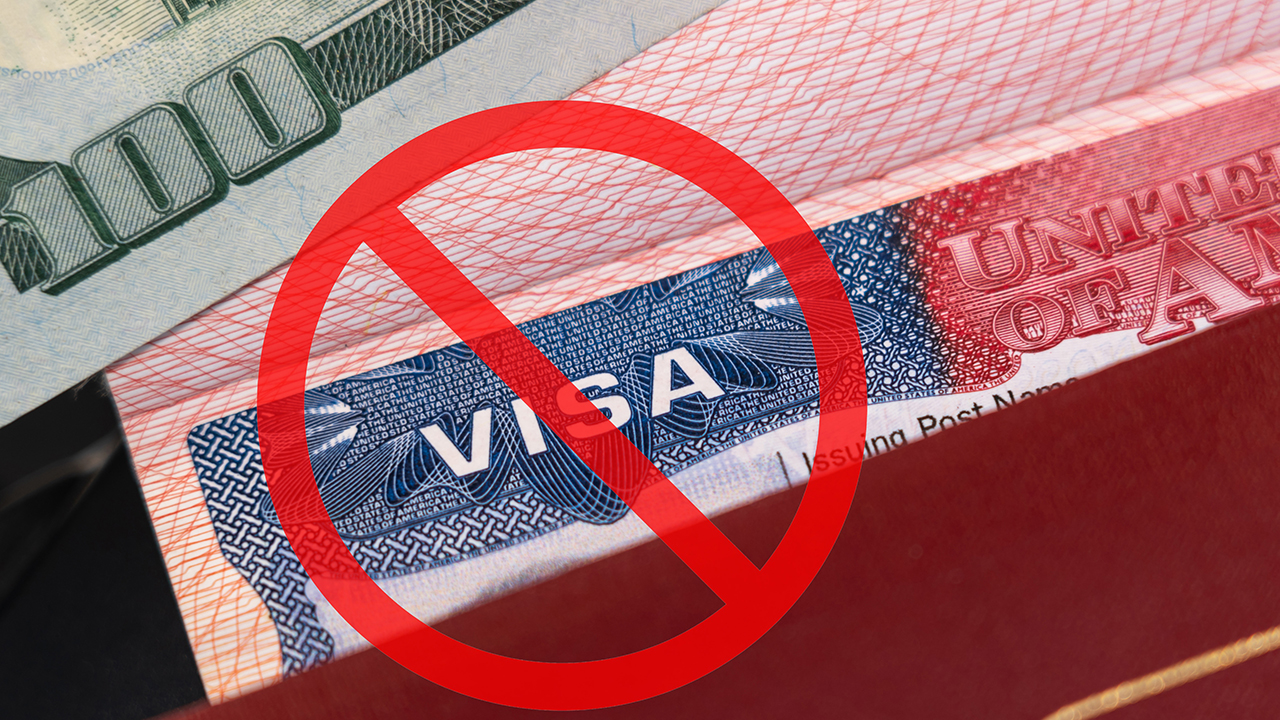
- Although two of the three founders of Open Balkan are still leading their countries, the cracks can no longer be hidden – Albania is saying goodbye.
- Assessments from the monitoring process are often out of step with what is really happening on the ground.
- Analysts: Vučić is flattered by Serbia’s role in Open Balkan as the hub of regional cooperation and skilfully uses it to present himself as a champion of good-neighbourly relations
- Some see Open Balkan as an American concept, others as a consolation prize instead of a clear plan for integrating the Western Balkans into the EU.
“Prime Minister Edi Rama stated that the Open Balkan initiative has fulfilled its mission and that greater focus on the Berlin Process is needed, but these initiatives have never been alternatives to each other, as the prime minister has made clear dozens and hundreds of times. Today, when the Berlin Process is going through an awkward moment ahead of the annual summit in Berlin, anyone who wants to understand knows that Open Balkan was born of the need to advance the philosophy of the Berlin Process – not the conspiracy theories attached to the initiative, for demagoguery and folkloric nationalism.”
Albanian Prime Minister Edi Rama, who was the first to switch on the stop light for Open Balkan, would undoubtedly agree with this statement, given to Samo Prasaj by the Media and Information Agency of the Government of the Republic of Albania. Rama is one of the loudest advocates of “closing” Open Balkan, thereby throwing down the gauntlet to Serbian President Aleksandar Vučić, who sees the initiative as his political tool for maintaining leadership in the region.
Although it is not yet possible to give a final assessment of the Macedonian government’s position on the issue, the impression is that Skopje’s steps regarding Open Balkan are cautious. This can be seen in the position it gave Samo Prasaj, that “the Government will always express support for regional initiatives aimed at improving the situation”, while stressing that although “the Government will promote this regional initiative”, it will not be the only option for developing trade, economic and social exchange.
“The Government will strongly advocate initiatives such as the Berlin Process, in which all Western Balkan countries participate, as well as full EU membership, which remains our strategic goal,” the Government told us.

Skopje’s caution at this stage need not mean anything, but analysis can go a step further and point out that the tone of the Macedonian government on this issue will be significantly influenced by the Albanian factor, which takes sides in the Vučić–Kurti conflict, advocating turning its back on Open Balkan, which occupies a central place in Serbia’s regional policy.
It is worth recalling that the first call for Macedonia to reconsider its participation in Open Balkan came from the head of diplomacy in the previous government, Bujar Osmani, which surprised people at home and in the region, given that Prime Minister Dimitar Kovachevski and the group of ministers around him declared themselves firm supporters of Open Balkan. Osmani then said that Open Balkan was more the idea of Albanian Prime Minister Edi Rama, as an attempt at reconciliation – as he put it, “an exit strategy for Serbia to establish relations with Kosovo, and even mutual recognition”.
Following up on Osmani’s statements, former ambassador Muhamed Halili, commenting on Kosovo Prime Minister Albin Kurti’s visit to Skopje in August this year, said that it was, among other things, “Skopje’s farewell to Open Balkan”.
“The Government should focus on closer economic, political and cultural cooperation with the governments of Kosovo and Bulgaria, as opposed to the policy of the previous SDSM and DUI governments of close cooperation with Vučić’s Serbia, including Open Balkan,” he said at the time.
Only five years have passed since, in 2019, Serbian President Aleksandar Vučić and Albanian Prime Minister Edi Rama invited then Macedonian Prime Minister Zoran Zaev to jointly form a “mini-Schengen” – an initiative that soon became Open Balkan. The idea was for the Balkans to be connected like the European Union. Although today two of the three founders of Open Balkan are still in the same leading positions in their countries, the cracks can no longer be hidden. Albania is saying goodbye, Macedonia is buying time with the excuse that the Government is still new, while Serbia awaits the outcome, hoping that Skopje will stay on the same line as Belgrade on this issue, ignoring the reconsiderations taking place in the Albanian political camp.
“It can be said that the Open Balkan process is currently stagnating,” Viktorija Trajkov, Deputy Minister for European Affairs and a close associate of new Prime Minister Hristijan Mickoski, tells Samo Prasaj. She notes, however, that this is partly due to the transition between the old and new governments.
The labour market is “in limbo”
True to its firm stance on preserving Open Balkan, Serbia will this year organise for the third time the “Wine Vision” fair, which has become Open Balkan’s trademark. The event is scheduled for 22–24 November in Belgrade. However, although the event is approaching, most Belgraders don’t even know it will take place.

Sava Mitrović from the European Policy Centre in Serbia stresses that Open Balkan was and has remained limited to three countries – Macedonia, Serbia and Albania – which is seen as a kind of handicap, since there are other countries in the Balkans.
 “On the one hand, this regional initiative has remained limited to only three Western Balkan countries, while on the other, the depth of their economic integration has not gone as far as originally announced. However, where Open Balkan has really delivered very concrete results is in the area of free movement of labour, i.e. the open labour market,” says Mitrović.
The open labour market was presented as one of the main benefits of Open Balkan. Since 5 March this year, Serbia, Macedonia and Albania have made it easier for workers to move between them. This means that workers no longer have to go to institutions such as the Ministry of Interior and the Employment Agency to obtain work and residence permits. The process is to take place electronically, through a dedicated website. The procedure is expected to take up to 30 days, after which a certificate is issued on the basis of which it is possible to find work.
The data we obtained from Serbia say that in the first ten days after the labour market opened alone, a total of 2,000 certificates were issued.
“However, how much this has really increased the mobility of workers in the region, and what the indirect economic benefits for the countries are, is something that can only be seen in the coming period,” says Mitrović.

From Albania, however, comes different news. After two agreements were signed in 2021 between the three Open Balkan member states – one on establishing an electronic database of citizens and the other on an online application for labour exchange in Macedonia, Serbia and Albania – it took two years for the three countries to agree on guidelines for implementing the agreement. On 22 January 2024 the protocols for implementing the free labour market agreement were finally signed. However, in Albania the protocols still have to go through internal legal procedures, which are required before implementation can begin.
In response to a request for information from the Albanian newsroom Faktoje in April 2024, the Albanian Ministry of Economy, Culture and Innovation, responsible for implementing the free labour market protocol, confirmed that “the Protocol is expected to be subject to final approval by the Council of Ministers and to enter into force”. But this approval has still not happened.
Hence, a simple search of the Albanian government’s online portal, e-Albania, confirms that no such service currently exists, which prevents applications for work in Serbia or North Macedonia. In addition, the online database between the three countries, which would make it possible to obtain an “Open Balkan ID” to apply for jobs, does not yet exist. Therefore, the “free labour market” between these three countries is not yet in force, our reporters from Albania say.

Our search showed that the Open Balkan open labour market portal exists in Macedonia. However, for this online application to work, the three countries must first implement the second protocol on electronic identification of citizens, signed on 22 January. This protocol will facilitate the creation of a database where citizens can apply for an identification number known as an “Open Balkan ID”, which will allow them to apply online for work in the host country.
Support from Skopje – for now
This discord speaks volumes about how politicised the question of Open Balkan’s current status is, and fully matches the positions of the three governments: Albania’s categorical distancing, Serbia’s support, and – for now – the support in Macedonia declared by the new government.

“For now, Open Balkan remains supported by us,” Viktorija Trajkov, Deputy Minister for European Affairs in the Government of North Macedonia, told us. She adds that Open Balkan is a positive concept because the Western Balkan countries have potential for economic cooperation, unlike the bilateral issues that burden their relations.
“I believe that as a concept – although opinions in the public were divided because a similar initiative exists within the Berlin Process – it perhaps did not achieve the original role for which it was conceived. But if there is will from the countries and good regional cooperation, even though for now only three of us are part of Open Balkan, I believe a great deal can really be done,” says Trajkov.
The new government in Skopje also views positively the memoranda signed within Open Balkan on tourism, cultural events and the recognition of diplomas and grades. It also considers important the Agreement on Disaster Protection, which is used during the frequent summer forest fires. “It’s good to cooperate, good to understand each other, good to sit down at the table and talk about all the challenges coming our way in the future, as well as the current situation,” our interviewee Viktorija Trajkov stresses.
Our interviewee from Serbia, Sava Mitrović, also considers it positive that steps have been taken within Open Balkan to further liberalise trade, i.e. to remove non-tariff barriers.
“So the countries agreed to move phytosanitary checks away from border crossings and to mutually recognise the relevant laboratory reports, trying to reduce the hours-long waiting of trucks at the borders. Together with other measures aimed at further cooperation between customs services and simplifying customs procedures, the Open Balkan countries really did manage to speed up the flow of goods in the region,” he believes.
However, assessments from the monitoring process are often out of step with what is really happening on the ground.

Strasho Jovanov, president of MAKAM-TRANS – the Independent Union of Truck Transporters of Macedonia – says the flow at the borders has not become easier.
“I was disappointed when I contacted the direct users of these border services. All of them unanimously said that, in terms of the speed of crossing the border, absolutely nothing has changed, even though from a technical point of view all the conditions have been created to speed it up – for example, two lanes, two weighbridges. The conditions have been created, but the whole thing is stuck on the human factor. The congestion is still there; it’s pointless dividing the trucks into two columns when one customs officer or one police officer checks the trucks. So the crossing time is the same,” he told us.
Jovanov says they had direct contacts with several directors of the Customs Administration and put forward proposals. “But you know that here this ‘official’s ego’ is so great that not a single wise, smart and well-founded proposal is accepted. The problem of slow truck movement through our Balkan space is organisational,” he says.
Looking at all these aspects gives the picture that Open Balkan is staying afloat just enough not to sink. One of its biggest weaknesses was, and still is, that Macedonia, Serbia and Albania were not joined by the other countries in the region, such as Montenegro, Kosovo and Bosnia and Herzegovina. Although senior political representatives from Montenegro and BiH attended the wine fairs in Belgrade in previous years, the remaining countries of the region did not join Open Balkan.
Vučić flattered
Hence our interviewee from Serbia, Mitrović, argues that the initiative is not aligned with the EU accession process – that it is not fully based on EU law – and that it is not inclusive enough.
“Although the EU and its member states do not give political and financial support to this initiative, which hinders its development, it was in fact launched on the model of, and fundamentally based on, the values of the Union itself. The Open Balkan participating countries stressed at every opportunity that the initiative is open to other countries in the region too, and that EU membership remains their primary foreign policy goal. However, what may have made the process harder is the still-lively ethnic intolerance in the region – above all, Serbian-Albanian cooperation, which is still not entirely popular in either Serbia or Albania,” says Mitrović.
Some see Open Balkan as an American concept, others as a consolation prize instead of a clear plan for integrating the Western Balkans into the EU. If it is the latter, the prize was spent long ago, and it can safely be said that it has been replaced by the Growth Plan for the Western Balkans – yet another political intermezzo meant to keep the poor countries of the region awake while the endless Brussels show of their admission to the European family goes on.
That is why the initial optimism and enthusiasm are slowly turning into cynicism towards Open Balkan, and the latest developments, with Albania’s exit and Serbia’s insistence that it survive, could easily become a source of new discord in the region.

In the Serbian public, the impression has formed that of everything Open Balkan can offer, the most important thing is the Wine Fair. Besides promoting domestic wine brands and wine tourism, it certainly also serves to promote Serbia as the hub of regional cooperation.
“Of course Serbian President Aleksandar Vučić is flattered by such a role and skilfully uses such gatherings to present himself to both the domestic and regional public as a champion of good-neighbourly relations. I am convinced that this message is received positively by his electorate, and certainly by a good part of the Macedonian public too,” concludes Sava Mitrović of the European Policy Centre in Serbia.
This content was produced by the Institute of Communication Studies.
Journalists: Sonja Kramarska, Dunja Marić (Nova.rs), Jona Plumbi (Faktoje.al)
Camera: Zoran Dogov
Editing: Fani Goshevska Zhivkovikj
Related stories (in Macedonian):
Open Balkan opened the borders a little, but the barriers remained
Open Balkan fell into the gap between Belgrade and Pristina
The Bar Association does not allow our lawyers to form partnerships within Open Balkan
This article was translated from Macedonian using artificial intelligence (AI). The original Macedonian version is available here.